

How Political Families Rule the Philippines, and Shape Filipino America Too
In the Philippines, power isn’t won. It’s inherited. Can this generation break the cycle?
Written By Clifford Temprosa
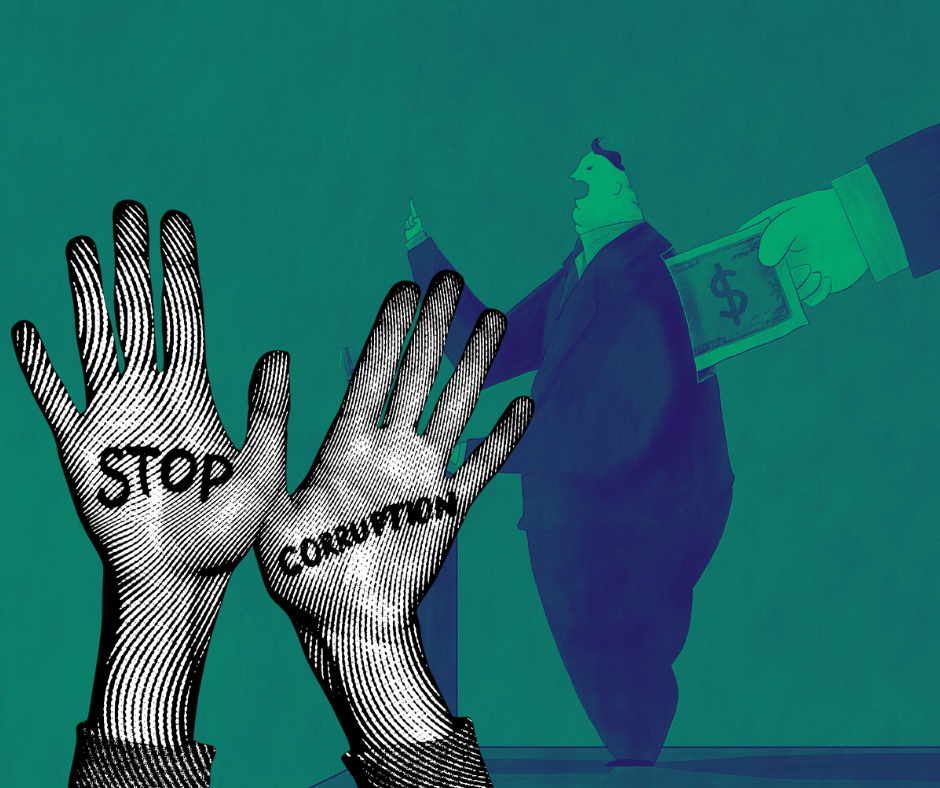
On a sweltering afternoon in Ilocos, a line of voters snakes outside a barangay hall. Each person clutches a stub redeemable for a kilo of rice - an “aid package” arriving just in time for the election. The rice is not charity; it is currency. For the dynasty distributing it, this is not generosity but investment. The people, caught between hunger and hope, exchange loyalty for survival
In Mindanao, a mayor finishes his third term. Legally barred from running again, he hugs supporters at his farewell rally. Days later, his wife files her candidacy for the same position. The campaign posters change faces but not surnames. In local politics, power doesn’t retire. It rotates.
And in Los Angeles, a Filipino American cultural group fractures after endorsing a Marcos-aligned candidate. Members resign, friendships dissolve, and the organization itself nearly collapses. Decades after Martial Law, the diaspora is still fractured by dynastic loyalties that travel farther than passports.
These stories are not exceptions. They are the architecture of Philippine democracy: ballots cast, promises made, but power recycled within families.
The Dynasty Republic
The Philippines is often called “the oldest democracy in Asia,” but in practice, it functions as a dynasty. Over 70% of the House of Representatives belongs to dynastic families. In the Senate, at least half of the seats are routinely filled by household names. Provincial boards, city councils, and barangay offices replicate the same pattern.
Elections become rituals of inheritance rather than contests of vision. Campaigns are not driven by manifestos but by memories - who one’s father was, what one’s grandfather promised, how one’s last name appears in the history books.
This is not democracy malfunctioning. It is democracy designed to reproduce dynasties. The 1987 Constitution bans dynasties “as may be defined by law,” but Congress, filled with dynasts themselves, never defined them. Reform was promised, then neutered. The system protects itself.
As a result, democracy in the Philippines is a theater of change masking a cycle of permanence. Poverty is managed, not solved, because poverty is the dynasty’s business model. Keep voters poor, distribute aid selectively, and ensure dependency remains intact.
Elections are not contests of ideas, but family reunions disguised as ballots.
Chinese Dynasties and the Cycle of Capital
Political dynasties alone do not sustain this system. They are reinforced by dynasties of wealth, many of them Chinese-Filipino families who dominate the economy.
The Sys (SM), Gokongweis (JG Summit), Tans (LT Group), and Gaisanos (retail empires) shape industries from banking to real estate, retail to airlines. While not always running for office themselves, their economic empires give them extraordinary political leverage. They fund campaigns, lobby policymakers, and dictate development priorities.
This intertwining of political and business dynasties blurs the line between governance and commerce. Political dynasties provide the electoral machinery; business dynasties provide the capital. Together, they reproduce a toxic cycle where wealth buys power, power protects wealth, and ordinary citizens remain trapped on the outside.
This is not unique to the Philippines, but here it is uniquely concentrated. The merging of surnames and capital creates a system where politics itself becomes another form of business - family-run, profit-driven, and insulated from accountability.
Power as Kinship
At its core, dynastic politics is not just about elections. It is about kinship systems weaponized for governance. Sociologists call this kinship feudalism. Anthropologists describe it as patron-clientelism. In everyday life, it looks like family obligations extended into public office.
A governor ensures contracts go to cousins. A congressman funds scholarships for nephews. A barangay captain distributes aid to relatives first. Nepotism is not a scandal. It is the norm.
Culturally, utang na loob (debt of gratitude) reinforces these networks. Voters feel obliged to repay political favors with loyalty. Patronage flows downward - cash, rice, jobs, scholarships - while obedience flows upward. The system is self-reinforcing: families survive by serving the dynasty, and the dynasty survives by sustaining families.
This is why political parties in the Philippines are weak and meaningless. They exist not as platforms of ideology but as vehicles for family power. The party name is incidental; the surname is everything.
The Local Face of Feudalism
Across municipalities, dynasties don’t just pass power down. Theyt spread it sideways. Parents, children, siblings, and in-laws simultaneously occupy different positions across the same town or province. A mayor, a vice mayor, and a congressman may all share the same last name, creating family-controlled fiefdoms where public institutions are indistinguishable from private households.
For constituents, this domination is often masked by spectacle. Voters are swayed not by platforms but by charisma, charm, good looks, and the display of wealth. Election campaigns resemble beauty contests and variety shows more than democratic debates. Families with the means to stage concerts, flood the streets with posters, or offer endless rounds of entertainment are rewarded with loyalty.
Governance becomes celebrity, and policy is sidelined by performance.
This culture hollows out meritocracy. Instead of leaders emerging from vision, competence, or track record, leadership is inherited by proximity - husbands, wives, sons, and daughters stepping into office as though it were a family business. But charisma is not competence, and inheritance is not accountability. Just because a politician can pass a seat to their spouse or child does not mean those heirs are prepared or effective.
Without true meritocracy, Filipinos are left at the whim of family interests. Decisions are made not for the public good, but for what strengthens the family’s hold on power. Development projects become photo opportunities, not systemic reforms. Jobs and scholarships are distributed to loyalists, not necessarily to those most in need. The dynasty thrives, but the people are left vulnerable - entrusting their futures to charm over substance, and to bloodlines over ideas.
Comparative Lens: Global Dynasties, Local Saturation
Political dynasties exist around the world. India has the Gandhis. Pakistan has the Bhuttos. Argentina had the Peróns. Peru has the Fujimoris. Even the United States has its dynastic streaks - the Kennedys, the Bushes, the Clintons.
But what makes the Philippines unique is saturation. In most democracies, dynasties exist alongside strong institutions and competing parties. In the Philippines, dynasties are the institutions. From barangay to Malacañang, dynastic politics permeates every level. There is no escape, no independent tier where family names don’t dominate.
This saturation explains why reform is so elusive. It is not a matter of one or two powerful families - it is the architecture of the political system itself.
Gender and Generational Politics
Dynasties perpetuate themselves not only through bloodlines but through gendered succession. When term limits arrive, wives or widows often step in. Known as “widow succession politics,” this ensures continuity without breaking the family’s hold. Corazon Aquino’s rise after Ninoy’s assassination is the most famous example, but the pattern is repeated across provinces: the mayor’s wife takes over, the governor’s daughter inherits, the congressman’s widow assumes office.
While these successions may look like gender breakthroughs, they often mask continuity. Women are placeholders, ensuring power stays within the family.
Generational succession suffocates outsiders. Sons and daughters of dynasts are groomed for office from childhood - educated abroad, networked early, handed political platforms on a silver platter. Meanwhile, brilliant young leaders without dynastic surnames find the path to politics blocked. A country of 110 million is governed as if leadership were a hereditary gene.
The Diaspora Doesn’t Escape
For many, migration was supposed to be an escape from the dysfunction. But dynastic politics travels with Filipinos abroad.
In Los Angeles, San Francisco, New York, and Chicago, diaspora organizations fracture along the same lines as the homeland. Endorsements for local U.S. candidates are often filtered through dynastic loyalties: Are you pro-Marcos? Anti-Duterte? Aligned with Aquinos? Even in American campaigns, where Filipinos could leverage collective power, the fractures of Manila weaken solidarity.
The diaspora becomes an echo chamber of homeland factionalism. Instead of uniting around immigrant rights, healthcare, education, or racial justice, Filipino America reenacts the same loyalty wars - reducing collective influence in U.S. politics. The result: diluted immigrant influence in multicultural coalitions. While other communities mobilize around issues, Filipinos remain divided by names that mean little outside the archipelago.
Dynasties don’t just rule the Philippines—they follow us into the diaspora.
The Human Cost
Dynasties are not abstract problems. They shape daily lives.
● In provinces, poverty becomes a tool of political management - votes exchanged for sacks of rice, medicines, funeral assistance.
● In cities, public policy is hollowed out to serve dynastic needs. Schools remain overcrowded, hospitals underfunded, housing precarious. Reform that threatens patronage networks is blocked.
● In the diaspora, energy that could be mobilized into unified political power is wasted on reproducing the homeland’s divisions.
Charisma, charm, and wealth may win elections, but they cannot substitute for competence. Instead of systemic reforms, dynasties deliver photo opportunities: ribbon cuttings for half-finished bridges, groundbreakings for projects that never materialize, handshakes in place of healthcare. The gap between performance and policy widens, leaving citizens with leaders skilled at spectacle but absent in substance.
The cost is generational: a cycle of dependency, stagnation, and fractured identity. Poverty remains entrenched, accountability remains absent, and politics becomes synonymous with inheritance, not service.
Toward a Meritocracy
The danger of dynasties is not only what they sustain but what they prevent.
A nation governed by recycled surnames cannot innovate politically. Policy becomes shallow, designed to preserve family dominance rather than solve systemic problems. Leadership pipelines shrink, and young leaders without dynastic ties are suffocated before they can rise.
A diaspora fractured by dynastic loyalties cannot wield real power abroad. Instead of building solidarity across issues like immigration reform or healthcare, Filipino America dissipates its energy in factional fights - leaving the community weaker in America’s multicultural democracy.
And what of the next twenty years? If dynasties remain unchallenged, the same surnames will dominate ballots in 2045, their heirs groomed to inherit offices like estates. But cracks may emerge: generational fatigue, a digitally empowered electorate, or a youth movement unwilling to accept inheritance as democracy. The question is whether those cracks will widen in time, or whether the dynasties will adapt, reinvent, and entrench themselves again.
The Philippines does not lack leaders. It lacks the freedom to choose them.
When Names No Longer Rule
If democracy is to mean anything, it cannot be built on inheritance. A last name should not be a political platform.
That requires:
● Anti-dynasty laws that are not just written but enforced.
● Independent leadership pipelines, where accountability, vision, and service matter more than bloodline.
● Diaspora accountability, refusing to import Manila’s feuds into U.S. politics.
● Breaking the toxic cycle of capital and politics, where business dynasties bankroll political dynasties and together strangle reform.
Even opposition is dynastic: democracy defended not by the people, but by a different last name. In the homeland, poverty is managed, not solved because poverty is the dynasty’s business model. A last name shouldn’t be a political platform.
Written By Clifford Temprosa

















When the Avengers: Doomsday one-year countdown dropped, audiences didn’t just watch. They paused, replayed, shared, and even speculated about hidden messages. A week later, the clip surpassed 14 million views, becoming a viral moment picked up across major media outlets that fueled anticipation for the next chapter of the Marvel Universe.
The countdown video was the result of a collaborative effort led by AGBO and its studio partners. Supporting the marketing team as a contracted editor was Joshua Ortiz (@joshuajortiz), a Filipino American filmmaker whose career has steadily built toward opportunities to contribute to projects of this scale, alongside earlier success with the short films he has written and directed.