

Filipino Student Orgs Have the Sauce And It Could Be the Blueprint for Filipino America’s Future
How turning culture into civic power can shape policy, community, and justice for the next gen.
Written By Clifford Temprosa
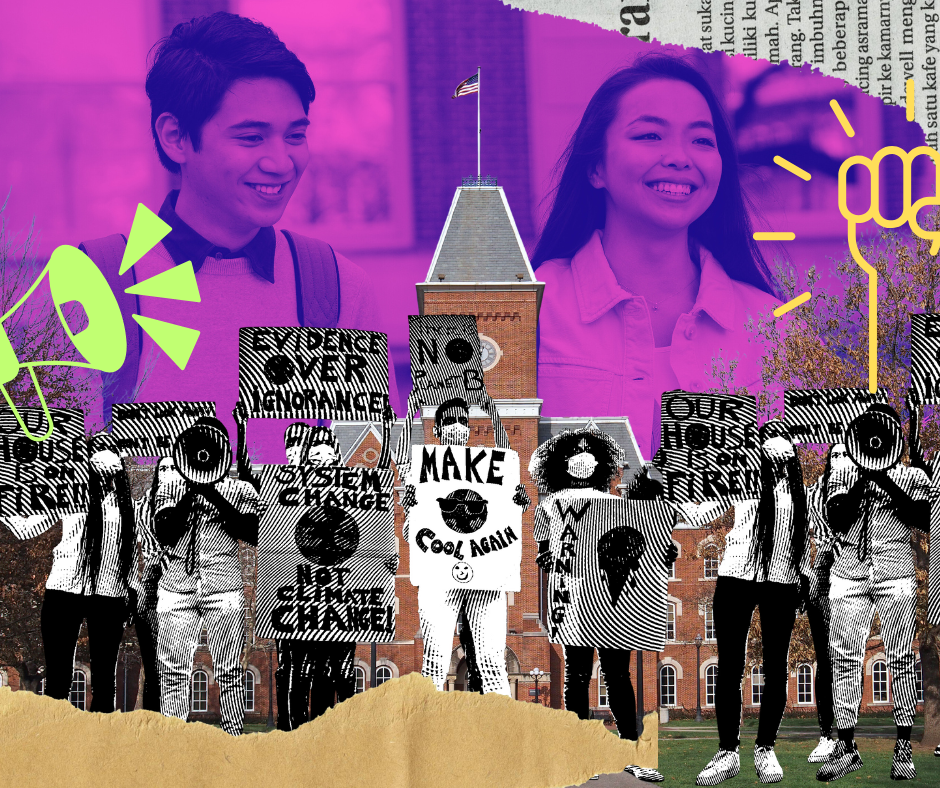
Every spring, Filipino student orgs across the country fill auditoriums with the rhythms of kulintang and the snap of tinikling sticks. Culture nights have become a rite of passage: hours of practice, laughter with friends, and the pride of performing traditions our families carried across oceans. They are beautiful, necessary reminders of who we are in a country that erases us.
But here’s the question we don’t ask enough: what if Filipino collegiate organizations were resourced not just as cultural clubs, but as engines of civic change?
Because they already hold the ingredients for power. The Filipino Intercollegiate Networking Dialogue (FIND, Inc.) in the Northeast, the Midwest Association of Filipino Americans (MAFA), and the Southern California Filipino Student Alliance (SCFSA) coordinate thousands of students every year. They run conferences, host workshops, and sustain alumni pipelines. That’s not just student activity. That’s infrastructure. The kind political campaigns spend millions trying to build.
The Hidden Organizing Power
These orgs already recruit, mobilize, fundraise, and manage databases of contacts. If they can fill an auditorium for culture night, they can fill a precinct with voters.
What they lack is not potential. It’s vision, funding, and belief from the rest of us.
Filipino collegiate orgs are too often dismissed as spaces for lumpia, dance, and friendship. And yes, those things matter. They sustain us. But when we stop there, we strip away the radical possibility these orgs carry. Every leadership conference is also a training ground for advocacy. Every general body meeting is a civic classroom. Every student who finds belonging here could also find their political voice.
A Needed Self-Critique
Filipino collegiate orgs, as powerful as they are, cannot keep hiding behind safe programming. It is no longer enough to host cultural showcases or issue statements on the Philippines without building real campaigns here at home.
Too often, orgs stay in the comfort zone of food and performance, celebrated but politically harmless. Conversations stay in the bubble of Filipino pride, without grappling with how our struggles intersect with Black, Latinx, Indigenous, and Asian communities. Leadership roles become résumé lines instead of responsibilities to wield power for justice.
And for those who have stepped beyond the bubble, who already organize rallies, protests, or community conversations, the challenge is to go further. Activism cannot stop at slogans or symbolic actions. It must evolve into policy demands, organizational building, voter engagement, institution-shaping, and solutions that shift power. Protests raise voices, but unless they are paired with strategy and structure, power remains untouched.
And let’s not forget privilege. To even attend college, to gather in safe student spaces, to access funding and campus platforms, is already privilege that many Filipino workers, immigrants, and undocumented kababayan don’t have. The question is: will we use that privilege to build solidarity and structural change, or will we waste it on superficial celebrations?
This isn’t condemnation. It’s challenge. The generation that fills gyms for culture nights can also fill city halls for policy fights. The same students who organize dance practices until 2 a.m. can organize voter drives, teach-ins, and campaigns that win resources for their people. But only if they see themselves not just as keepers of culture, but as agents of power.
Beyond Commentary, Toward Solutions
Filipino America cannot survive on commentary alone. We cannot just talk about homeland politics every election cycle or post hashtags about issues abroad while neglecting the structural challenges we face here.
What we need is a generation of Filipino Americans building solutions in policy, entrepreneurship, think tanks, nonprofit and NGO work, philanthropy, and government.
Imagine if FIND launched a Filipino American public policy think tank that trained students to draft legislation and conduct research. Imagine MAFA starting a social enterprise incubator, helping students launch businesses that reinvest in their communities. Imagine SCFSA formalizing a mutual aid network that mobilizes students across California for disaster response, immigrant aid, or food justice. These aren’t fantasies. They’re possible extensions of the infrastructure that already exists.
From Diploma to Duty: Building a Community-Centered Professional Pipeline
Not every student will become an organizer, politician, or nonprofit leader, and that’s okay. Many will become nurses, doctors, teachers, engineers, lawyers, tech innovators, or finance professionals. But the challenge is this: how do we make sure those careers are harnessed for community power, not just individual success?
Every profession can be a tool for collective power:
Doctors who fight for healthcare access for immigrant families.
Nurses who bring their skills to free clinics and wellness programs.
Lawyers who volunteer pro-bono for kababayan facing wage theft or deportation.
Finance leaders who redirect capital into Filipino-owned businesses and nonprofits.
Educators who integrate Filipino history and civic responsibility into their classrooms.
Engineers and tech leaders who design platforms for language access, voting rights, and immigrant services.
Professional success becomes community success only if it remains tied to the collective. That won’t happen by accident. It requires intention, alumni networks that challenge graduates not to disconnect, student orgs that teach leadership as a lifetime responsibility, and a community that demands reciprocity.
The problem is not that we lack Filipino professionals. We have them in every sector, often excelling. The problem is that too many of us disconnect our careers from our communities once the diplomas are framed. If Filipino America is to build real power, we must reimagine the professional pipeline as more than a road to personal stability. It must become a lifeline for community resilience, equity, and self-determination.
Beyond Four Years: Making Student Leadership Last a Lifetime
Too often, the pipeline breaks at graduation. Students who poured themselves into Filipino orgs—leading conferences, organizing showcases, even mobilizing around justice issues—walk away once they leave campus. Without clear pathways into public sector or civic work, they disappear into corporate careers, leaving movements weaker than they should be.
This is not about condemning ambition. Filipino America needs engineers, doctors, lawyers, and tech leaders. But when ambition is detached from community, we lose the very leaders we spent years cultivating. The movements they built become hollow, reliant on the next wave of undergraduates who will also cycle out, repeating the same story of disconnection.
This cycle has to end. Filipino collegiate orgs should not be a four-year fling with identity, but the starting point of a lifetime of civic responsibility. That requires deliberate strategies: alumni pipelines that connect graduates to nonprofit boards, campaign work, and public service fellowships; professional networks that encourage reciprocal investment; partnerships with civic organizations that give students roles beyond campus; and a culture shift where Filipino pride is carried into institutions, not left at graduation.
Without continuity, there is no power. If every four years we restart from zero, Filipino America will never have the momentum to transform culture into civic strength.
The Frontlines of Our Future: A Blueprint for Filipino Collegiate Power
If we are serious about Filipino political power, then let’s stop treating student orgs as hobbies and start treating them as the frontlines of our future.
We cannot wait until students graduate burnt out and directionless. We cannot keep wasting the talent, energy, and organizing muscle sitting on our campuses. Leadership is already blooming here, so why aren’t we watering it?
Here’s what must happen now:
Resources and training. Real grants for advocacy and civic programming, not token checks for costumes. Skills to run campaigns, write policy, and move people to the polls.
Support with vision. Alumni, nonprofits, and community leaders must step up as mentors, partners, and investors. If civic leadership ends at graduation, we have failed.
Policy and research. Student orgs should become policy players—drafting briefs, shaping legislation, and producing data so our community is never ignored.
Professions for justice. Every career path—law, medicine, tech, business—must be tied back to community service and reinvestment.
Coalition-building. Formalize partnerships with Black, Latinx, Indigenous, and Asian orgs. Solidarity multiplies our strength.
Digital power. Train students to weaponize their digital native skills for civic education, narrative change, and rapid mobilization.
Alumni responsibility. Stop treating collegiate experience as nostalgia and start treating it as obligation—through mentorship, donations, and access to power.
Civic pipelines. Create clear pathways from campus leadership into nonprofit boards, government fellowships, campaign jobs, and public service careers.
Leadership beyond rallies. Protests are vital, but power is won in boardrooms, legislatures, and budget hearings. We must train students not only to march, but to negotiate, legislate, and govern.
Cultural and civic fusion. Don’t replace culture, elevate it. Every culture night should also be a voter registration hub. Every conference should pair heritage with strategy sessions on power.
Because here’s the truth: culture is power, but culture without politics is performance. And our community cannot afford performance anymore.
Not a Dream, But a Choice: The Future of Filipino Collegiate Power
Filipino collegiate orgs don’t need to abandon what they already do so well. The dances, the food, the friendships, they are the roots. But roots are meant to grow.
Imagine this: every culture night doubles as a voter registration drive. Every leadership conference produces policy platforms, not just icebreakers. Filipino students graduate not only with diplomas, but with résumés of campaigns led, coalitions built, enterprises launched, and justice demanded.
That is not a dream. That is a choice.
The next generation of Filipino leaders is not waiting in the wings. They are already on stage, already organizing, already proving their capacity.
And to every alumnus of FIND, MAFA, SCFSA, and beyond, this is your move. Your money, mentorship, and networks are the difference between a four-year fling with culture and a lifetime of civic leadership.
So the only question left is this: will we keep them locked in the margins of cultural performance, or will we unleash them as the civic powerhouses Filipino America and this country desperately need?
Written By Clifford Temprosa


















When the Avengers: Doomsday one-year countdown dropped, audiences didn’t just watch. They paused, replayed, shared, and even speculated about hidden messages. A week later, the clip surpassed 14 million views, becoming a viral moment picked up across major media outlets that fueled anticipation for the next chapter of the Marvel Universe.
The countdown video was the result of a collaborative effort led by AGBO and its studio partners. Supporting the marketing team as a contracted editor was Joshua Ortiz (@joshuajortiz), a Filipino American filmmaker whose career has steadily built toward opportunities to contribute to projects of this scale, alongside earlier success with the short films he has written and directed.