

Lani T. Montreal takes the spotlight in 'Anak ni Tapia'
Out of her mom's shadow: Daughter of Filipina actress gets personal about fame, family in one-woman show
Written by Jamey V. Padojino

Anak ni Tapia, a one-woman show by playwright Lani T. Montreal (pictured), is about her life as the daughter of late actress Mely Tagasa, who portrayed Ms. Tapia, which was originally a cartoon character seen in the background from the comic strip Baltic & Co. Photo by Michelle Reid.
Filipino moms come in all kinds of forms. There are the ones who'll make you perform for visitors, the ones who primarily point with their lips and the ones with walking knowledge of superstitions, just to name a few.
Lani T. Montreal's experience was different from most of us. She had a celebrity mom, the late Mely Tagasa, who played Ms. Tapia during the '70s and '80s on the Philippine sitcoms Baltic & Co. and Iskul Bukol.
But for all the laughs Mely gave on screen in her signature black glasses and hair bun, Lani's one-woman show gives a new, personal perspective of living behind her mother's shadow.
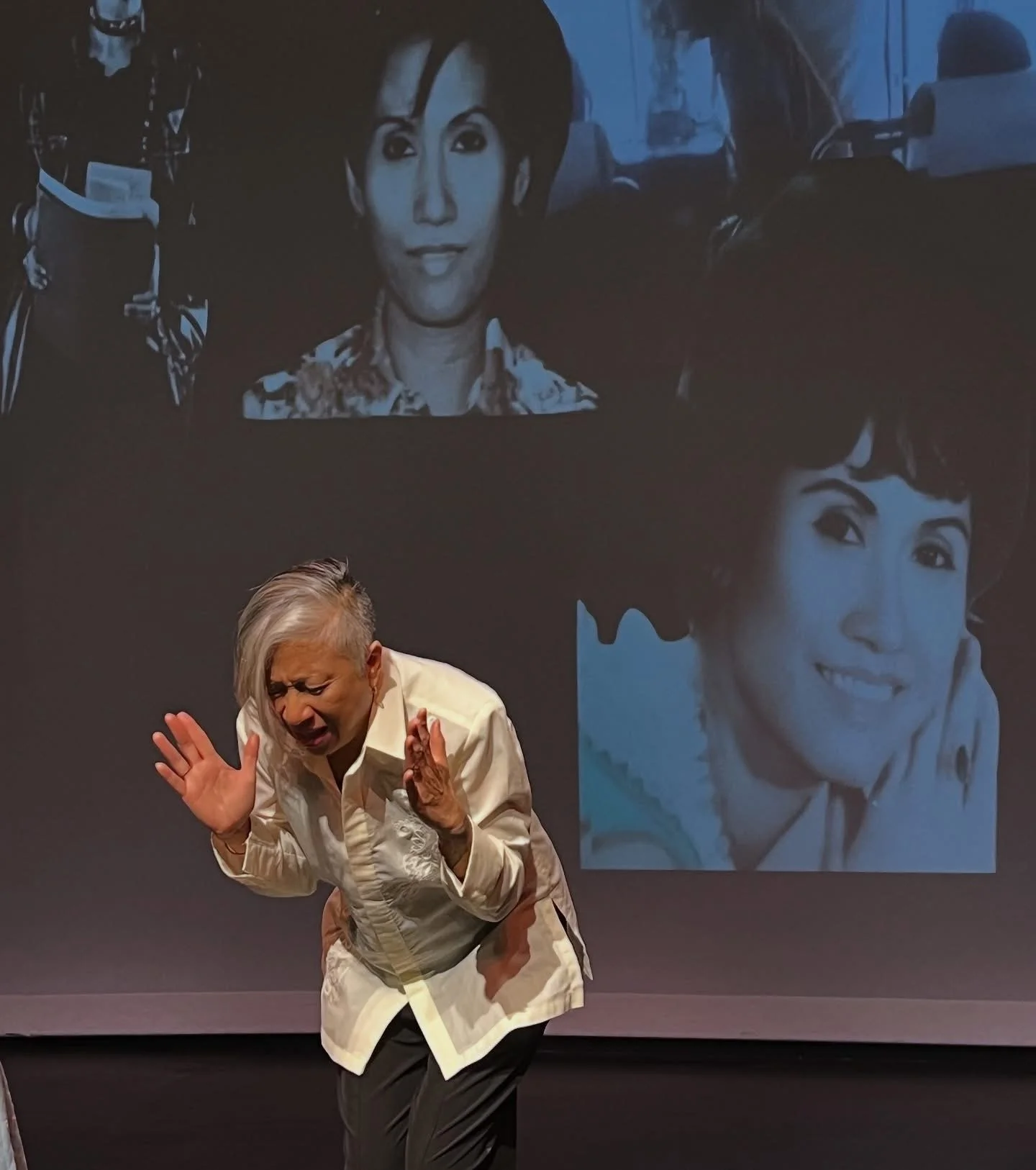
Lani T. Montreal delivers lines from Anak ni Tapia with images of her late mother, Mely Tagasa, projected in the background during an August 2025 performance at Potrero Stage in San Francisco. Photo by Ara Chawdhury.
Aptly titled Anak ni Tapia: Leaving Mother, Lani explores her relationship with the famed actress while growing up in the Philippines, where she was born in the 1960s. Debuting last year, the show is also Lani's coming-of-age story as she navigates life as a queer immigrant in the United States and Canada in the 1990s. The show's title holds a double meaning for Lani, who not only left her motherland, but also left her mother. In 2018, Mely died at 82 after suffering a stroke that put her in a coma for 14 days.
"I wrote the piece not just to find out who I am, but also to find out who she was," Lani said in a recent interview with Kollective Hustle.
During the 75-minute show, Lani steps into the spotlight, delivering humor, drama, introspection and song. There are also some lines for the audience, who at times are prompted to yell "anak ni Tapia," which translates to "child of Tapia." It's a title Lani embraces in the show, though the opposite was true growing up. In addition to projections of images and videos, live music and sound effects were important factors in the show, as seen through the occasional Tagalog songs played by a guitarist on stage.
The show opens with TV news clips announcing the passing of Mely. Lani pays tribute by singing a kundiman (Filipino ballad), reminiscent of the music she heard on the radio while growing up in the Philippines and the types of songs her mother would sing.

Lani T. Montreal, right, poses with her daughter, Alexa Bermudez, left, and music collaborator Joshua Icban outside of Potrero Stage in San Francisco in August 2025. Courtesy Lani T. Montreal
Mely's drive for success didn't make her the most comforting of mothers. Before she rose to fame, she worked as a voice actor, then became a writer for radio and TV. Mely would often spend late nights at the typewriter (a device Anak ni Tapia brings to life through "click-clack" sound effects) and yell if anyone disturbed her work. Mely's favorite swear word was "punyeta," a Filipino curse word that expresses shock.
In 1973, Mely landed a role on Baltic & Co. as Ms. Tapia, a payroll clerk who sold longganisa and tocino on the side. (In the one-woman show, Lani compares the sitcom to The Office). Five years later, Ms. Tapia became a teacher on Iskul Bukol, which became a hit.
Lani was quickly known as "anak ni Tapia" as she strolled behind Mely, carrying her clothes, costumes and make-up. "I am 12 years old and my mother's dakilang alalay — mortified gopher," Lani says in the show. Fans would swarm them during grocery store trips, pulling out receipts for autographs and feeding Mely with compliments.
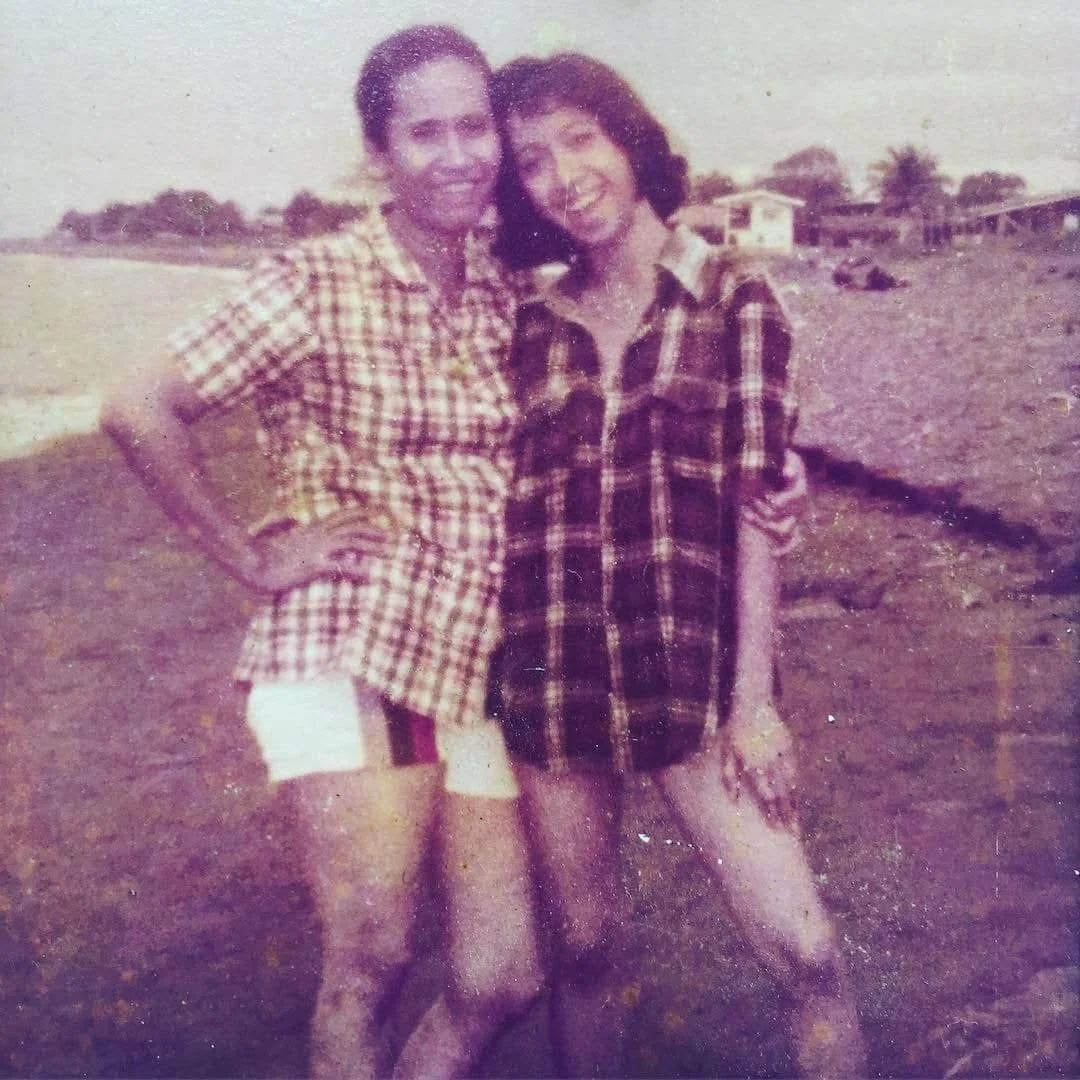
Mely Tagasa, left, and Lani T. Montreal, right, as a teenager in a photo featured in Anak ni Tapia. Courtesy Lani T. Montreal.
In an interview, Lani said show business felt plastic to her and loathed the long days spent waiting in the studio with Mely.
When Iskul Bukol ended, Ms. Tapia lived on in TV commercials and movies. Mely's enduring fame benefited the family through discounts at stores and never having to wait in lines. The original cartoon version of the character is even tattooed on Lani's left shoulder, which she proudly reveals on stage. When Mely died, Lani added flowers around the inked Ms. Tapia.
The mother-daughter relationship changed as Mely tried out multiple religions (ultimately becoming a Born Again Christian) and Lani discovered vices in high school. One night when Lani snuck back home after drinking with friends, Mely welcomed her home with fury, chased her around with a slipper and said, "You remind me so much of myself.
In December 1990, Lani immigrated to the United States in her 20s, at a time when getting a visa was "like winning the lottery." Her travels took her to Los Angeles, New York, Seattle and Chicago, where she reunited with an aunt, a sister of her mom, who called Lani "adventurous," just like Mely. The aunt also shared why Mely was disowned by her father, Lani's grandfather, which opens Lani's eyes to the lack of honest conversations with her mother.
Lani's travels also take her to Canada, where she embraced her queerness and formed a group with other young queer Filipino Canadians called Babaylan. She also wrote her first play about AIDS at the height of the health crisis, where the ghost of a young Filipino gay man appears to his grandmother, who helps his spirit move on. Friends nudged Lani to ask Mely to play the lead role, and Lani was surprised when her mother accepted the offer. Large crowds in Canada came to watch Mely, who was "supposedly homophobic." Lani had a girlfriend at the time, and Mely never questioned their relationship while staying with the couple.
The show takes the audience through Lani's relationships over the years, calling herself the "most proposed lesbian in history" at a time when gay marriage had not yet been legal. She eventually landed back in Chicago and married a man. "You know ma, to be honest, we're only getting married because I need a green card," Lani jokes when reenacting a phone call with her mother about the news. She plays off the marriage as a means to secure health insurance, which unlike Canada, isn't free in America.

Lani T. Montreal performs Anak ni Tapia during a 2024 performance at Links Hall in Chicago, Illinois. Photo by Michelle Reid.
The couple's journey into starting a family had its obstacles, and ultimately resulted in adoption. The journey into motherhood was an emotional one as Lani reflected on her time as a daughter. "I didn't want my kids to hate me like I hated my mother," Lani said in the show. She and her husband would go on to have three children, a son of and two daughters, whom Mely met.
Lani rushed back to the Philippines and stayed by Mely's side for 14 days before she passed away, when her mother's "forehead finally relaxed." On stage, Lani contemplates her new reality through three simple but life-changing words: "My mother died."
In the end, Lani confronts questions about her identity without her mother, as well as her decision to leave the Philippines for her own journey of self-discovery, away from Mely's hopes and expectations. The memories of a mother remain even if they are miles away or have moved on to the next life.
Anak ni Tapia debuted in June 2024 in Chicago following a six-month artist fellowship at Links Hall when Lani developed the show. It has since been performed in Milan, Los Angeles, Toronto and most recently San Francisco during PlayGround's Free Play Festival held at the Potrero Stage Aug. 8-10. The show's next run is scheduled in Puerto Vallarta, Mexico later this year.
For Lani, the show has become part of her body. Instead of focusing on the mechanics of the production, she can focus on the meaning behind each line and honor her mother's memory. "It is my tribute to her and I want to be able to reach out to folks who have experienced the same thing. It's connection, to connect with others, to share her story."
Written by Jamey V. Padojino


















When the Avengers: Doomsday one-year countdown dropped, audiences didn’t just watch. They paused, replayed, shared, and even speculated about hidden messages. A week later, the clip surpassed 14 million views, becoming a viral moment picked up across major media outlets that fueled anticipation for the next chapter of the Marvel Universe.
The countdown video was the result of a collaborative effort led by AGBO and its studio partners. Supporting the marketing team as a contracted editor was Joshua Ortiz (@joshuajortiz), a Filipino American filmmaker whose career has steadily built toward opportunities to contribute to projects of this scale, alongside earlier success with the short films he has written and directed.