

The Untold Story of Filipino Fraternities & Sororities and How They Built the Foundation of Asian American Greek Life We Know Today
Written By Clifford Temprosa
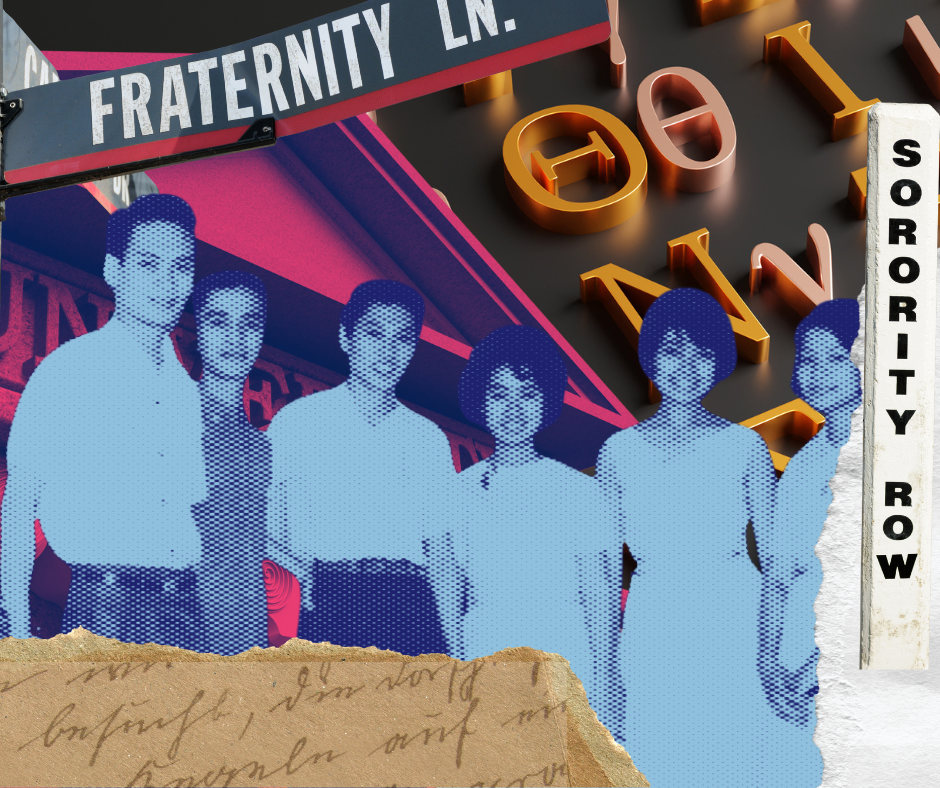
Filipino students didn’t just join Asian American Greek life. We built it. And if you’ve never heard that before, it’s because history books erased us. Worse, sometimes we erased ourselves.
Erasure Is Not an Accident
Mainstream tellings of Asian American Greek history are comfortable lies. You’ll see timelines, books, even panels on “the history of Asian Greeks” that never mention Chi Rho Omicron or Kappa Psi Epsilon, or even the Filipino contributions to Asian American Greek Life. Erasure isn’t neutral - it’s theft.
Chi Rho Omicron, founded 1995 at Fresno State, has 13 chapters and 700+ alumni.
Kappa Psi Epsilon, founded 1992 at San Francisco State, is the first Filipina-founded sorority.
National Presidents of Lambda Phi Epsilon, the largest Asian American fraternity, have been Filipino.
National Founders of Fraternities and Sororities such as Sigma Psi Zeta, Pi Delta Psi, and others, have Filipino roots.
Local and regional Founders of organizations such as Delta Epsilon Psi, Alpha Phi Gamma, Delta Phi Epsilon are Filipinos.
The Chair of the National APIDA Panhellenic Association (NAPA) is a Filipino American.
Across NAPA’s 20+ orgs, Filipinos are embedded everywhere, shaping expansion, rituals, and leadership.
And yet, articles, conferences, and Greek histories erase us. This mirrors a wider truth: Filipinos are the third-largest Asian group in the U.S., but underrepresented in politics, academia, and Asian American studies. We are visible in numbers, invisible in narrative.
Meanwhile, White fraternities used their institutions to build generational wealth and political dynasties, from Skull & Bones to IFC orgs that produced senators, CEOs, and presidents. Filipino Greeks? We built fortresses on hostile campuses just to survive. White Greeks entrenched privilege. Filipino Greeks fought erasure. Both were political, but only one was recognized.
Greek Life as Infrastructure
For most, Greek life was recreation. For Filipinos, it was resistance infrastructure.
When campuses denied Filipino services, ignored demands for Asian American studies, and wrote us off as “niche,” our fraternities and sororities became parallel institutions. We didn’t wait for permission. We built it anyway.
Membership pipelines doubled as mentorship and political education.
Dues and alumni capital became scholarships and emergency aid.
Community partnerships connected us to hometown associations, nonprofits, unions.
Step shows and cultural nights became platforms for voter registration, typhoon relief, and immigrant rights.
This wasn’t accidental, it was historical continuity. When labor unions excluded Filipinos, Larry Itliong and the manongs built their own. When universities erased Asian Americans, Filipinos joined the Third World Liberation Front to demand ethnic studies. When OFWs were abandoned, they formed hometown associations worldwide.
Greek life was the campus arm of that same instinct: when denied entry, Filipinos build our own doors.
And we didn’t build alone. Filipino American Fraternity and Sorority members collaborated with MEChA, Black Student Unions, and Asian American coalitions. We weren’t just cultural clubs, we were nodes in multiracial resistance.
From Letters to Legacies
To outsiders, Greek life looks shallow: letters, chants, merch. But for Filipinos, letters weren’t ornaments. They were weapons, barongs, and balikbayan boxes of pride, carried into spaces designed to erase us.
Every meeting was governance training. Every fundraiser was practice in resource mobilization. Every ritual was cultural reclamation disguised as fraternity or sorority tradition.
Many members of fraternity and sorority life became nonprofit directors, educators, immigration lawyers, and elected officials. Our orgs were civic pipelines that incubated leaders when no one else would.
Let us remind you that they weren’t only for men. Sororities challenged patriarchy within Greek systems and Filipino communities. Filipinas helped build organizations like Kappa Phi Lambda, Alpha Sigma Rho, and Delta Phi Omega into national powerhouses. Queer Filipino Greeks cracked open our fraternities, forcing reckonings with toxic masculinity and redefining brotherhood and sisterhood.
Our letters weren’t stitched fabric. They were shields reforged for a new battlefield.
The Gap With Our Parents
Our parents rarely understood Greek life.
For immigrant families, college was survival: get the degree, get the job, repay the sacrifice. A fraternity or sorority looked like distraction - or danger. Hazing. Wasted money. Lost grades.
They didn’t see what we saw: that Greek life was a battlefield where our existence was on trial. Where they saw indulgence, we saw defense. Where they saw risk, we saw belonging.
Our parents sacrificed to put us in classrooms. We had to fight another war once we got there.
Betrayal, Drift and The Sleeping Giant
Here’s the hardest truth: too many Filipino and Filipino Founded organizations today have drifted.
What began as fortresses of resistance has in some places softened into cliques and merch drops. Rituals that once carried political fire now run hollow. Letters that once meant survival have been reduced to Instagram filters.
That’s not growth, it’s rot. If we turn our shields into costumes, we betray the people who built them.
The scale of what’s dormant is staggering:
Hundreds, if not thousands of collegiate and alumni chapters across all 50 states.
Thousands of fraternity and sorority members with Filipino roots across the country
Filipino Americans with training, skills, and the ambition to organize
That’s not just a network. That’s institutional capacity, a sleeping army big enough to sway elections, fund community centers, and rewrite Filipino American political identity.
The only question: will we wake it, or let it rot?
Blueprint + Policy Demands
The future isn’t abstract, it’s technical. It’s urgent. And it’s possible.
For Filipino Greeks:
Alumni capital is Movement endowments. Stop hoarding nostalgia. Fund scholarships, legal defense, and community orgs.
Step shows are Political education. Use platforms for voter registration and history.
Conferences become Movement conventions. Repurpose gatherings into strategy labs for Filipino power.
Networks cataylze Electoral machines. Mobilize chapters in swing states to change elections.
For institutions:
Universities must archive Filipino Greek histories alongside Asian American studies.
Funders must stop dismissing Greek orgs as “student clubs” and invest in them as leadership incubators.
Erasure isn’t just cultural, it’s institutional. And institutions must be held accountable.
Vision + Provocation
Imagine Filipino Greeks as the largest organized Filipino alumni network in America:
Endowing scholarships and community centers.
Funding Filipino candidates for office.
Teaching culture and history across campuses.
Protecting our people from deportation, wage theft, and hate violence.
That’s not tomorrow, it’s now. If we act. So let’s be clear:
To Filipino Greeks today: Stop softening the legacy. Your letters aren’t for clout - they’re for struggle.
To Asian American orgs: Stop erasing us. Filipino Greeks are not footnotes - we are foundations.
To alumni: Your capital - financial, social, political - is not for nostalgia. It’s for reinvestment.
What will we tell the next generation, that we inherited shields and turned them into costumes? Or that we took them back to war?
Reclaim the Narrative. Reclaim the Power.
We can’t let history erase us. We can’t let complacency rot us. Filipino Greeks are not accessories to Asian American Greek life. We are its foundation.
Our founders didn’t create these orgs for aesthetics. They created them for advocacy, survival, and justice. They built stepping stones that doubled as stonewalls - fortresses of identity, unmovable, unapologetically Filipino.
Now it’s our turn. Reclaim the narrative. Reclaim the legacy. Weaponize your letters. Because our history is not in the margins. It’s in the foundation. And it will not be erased.
Written By Clifford Temprosa












When the Avengers: Doomsday one-year countdown dropped, audiences didn’t just watch. They paused, replayed, shared, and even speculated about hidden messages. A week later, the clip surpassed 14 million views, becoming a viral moment picked up across major media outlets that fueled anticipation for the next chapter of the Marvel Universe.
The countdown video was the result of a collaborative effort led by AGBO and its studio partners. Supporting the marketing team as a contracted editor was Joshua Ortiz (@joshuajortiz), a Filipino American filmmaker whose career has steadily built toward opportunities to contribute to projects of this scale, alongside earlier success with the short films he has written and directed.