

From city streets to gallery walls: Filipino resistance in San Francisco reverberates through 'Makibaka' exhibit
Art captures history made through organized action
Written by Jamey V. Padojino
When activists in the Philippines protested the dictatorship of President Ferdinand Marcos during the 1970s and 1980s, "makibaka" became their rallying cry. The powerful, four-syllable Tagalog word means "to fight" or "to struggle." It also captures a collective resistance that continues to echo across movements both in and out of the country, as well as in a new San Francisco art exhibit.

SOMA Pilipinas Director Raquel Redondiez, stands in front of "The Blighted And Valuable Streets Of South Of Market" by England Hidalgo, one of the pieces featured in the Makibaka: A Living Legacy exhibit at the Yerba Buena Center for the Arts in San Francisco on Aug. 20, 2025. Photo by Jamey V. Padojino.
Makibaka: A Living Legacy captures the history of Filipinos in the city, which has been and continues to be witness to their activism. Featuring more than 20 artists, the contemporary arts exhibit is on display at the Yerba Buena Center for the Arts through Jan. 4, 2026.
In the current political climate where there are attacks on the immigrant, LGBTQ+, poor and senior communities, the exhibit is also "a call to action to come together and to resist," said Raquel Redondiez, director of SOMA Pilipinas, the cultural heritage district that co-curated the exhibit.
The South of Market (SoMa) area holds much of this history, where many Filipino families settled following the 1965 Immigration and Nationality Act, which removed immigration quotas and prioritized families in petitions. The neighborhood has also been the "battleground" for housing rights, Raquel said. "Here in SoMa you have the richest census tract and poorest census tract right next to each other."
That disparity has led to conflicts that were met with grassroots movements, which resonate throughout the exhibit. One case in point is the Yerba Buena Redevelopment from the 1960s to 1990s, when thousands of homes were taken down for an "urban renewal," which included construction of the Moscone Center. Activism resulted in affordable housing, the Yerba Buena Center hosting the exhibit and neighborhood streets named after Filipino national heroes, such as Lapu-Lapu and Andres Bonifacio.
The art on the display further cements the presence Filipinos maintain in the area. Cristine Blanco's "Embedded Bricks III," produced earlier this year, features bricks with drawings (such as ocean waves) and words (such as trust) inscribed by SoMa residents. The bricks are laid out in a kusikus spiral, which is "an ancestral Filipino motif meant to ward off harm," a description accompanying the piece reads.
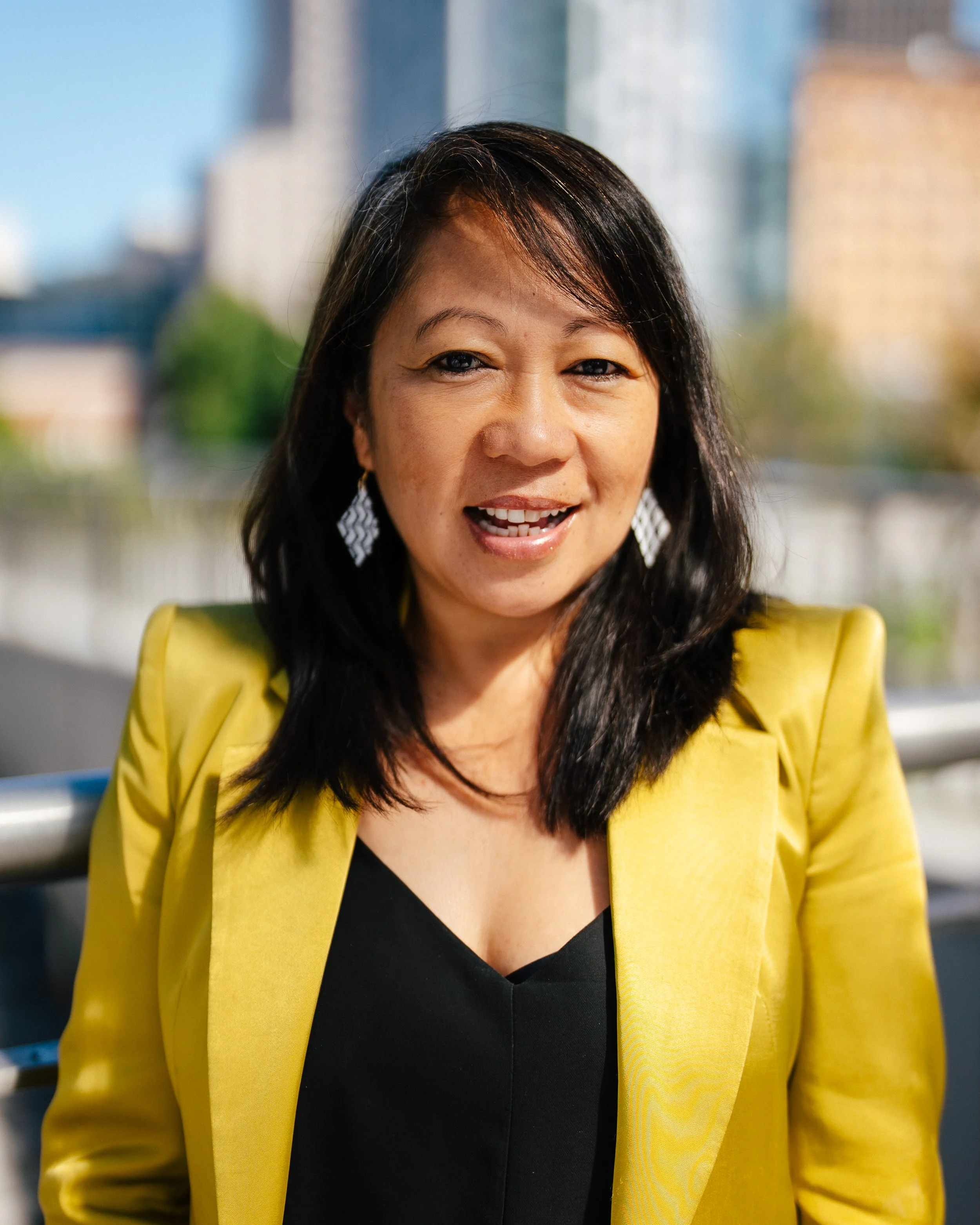
SOMA Pilipinas Director Raquel Redondiez. Photo by Nix Guirre.
Before Filipino families settled in SoMa, many Filipino men found their home blocks north in Manilatown, a community that was formed during the 1920s in the present-day Financial District. The place was a type of "bachelors society" where manongs retired after working on farms, fields and canneries, Raquel said.
Within Manilatown was the International Hotel (I-Hotel), which became the site of resistance for nearly nine years as the property owner attempted to evict the residents and turn the site into a parking lot. The tension came to a head on Aug. 4, 1977, when thousands of people formed a human barricade to keep more than 400 riot police officers from removing the tenants, who were ultimately forced out of the building. Tenant advocacy efforts in the following decades allowed the site to reopen in 2005 as affordable senior housing and the International Hotel Manilatown Center.
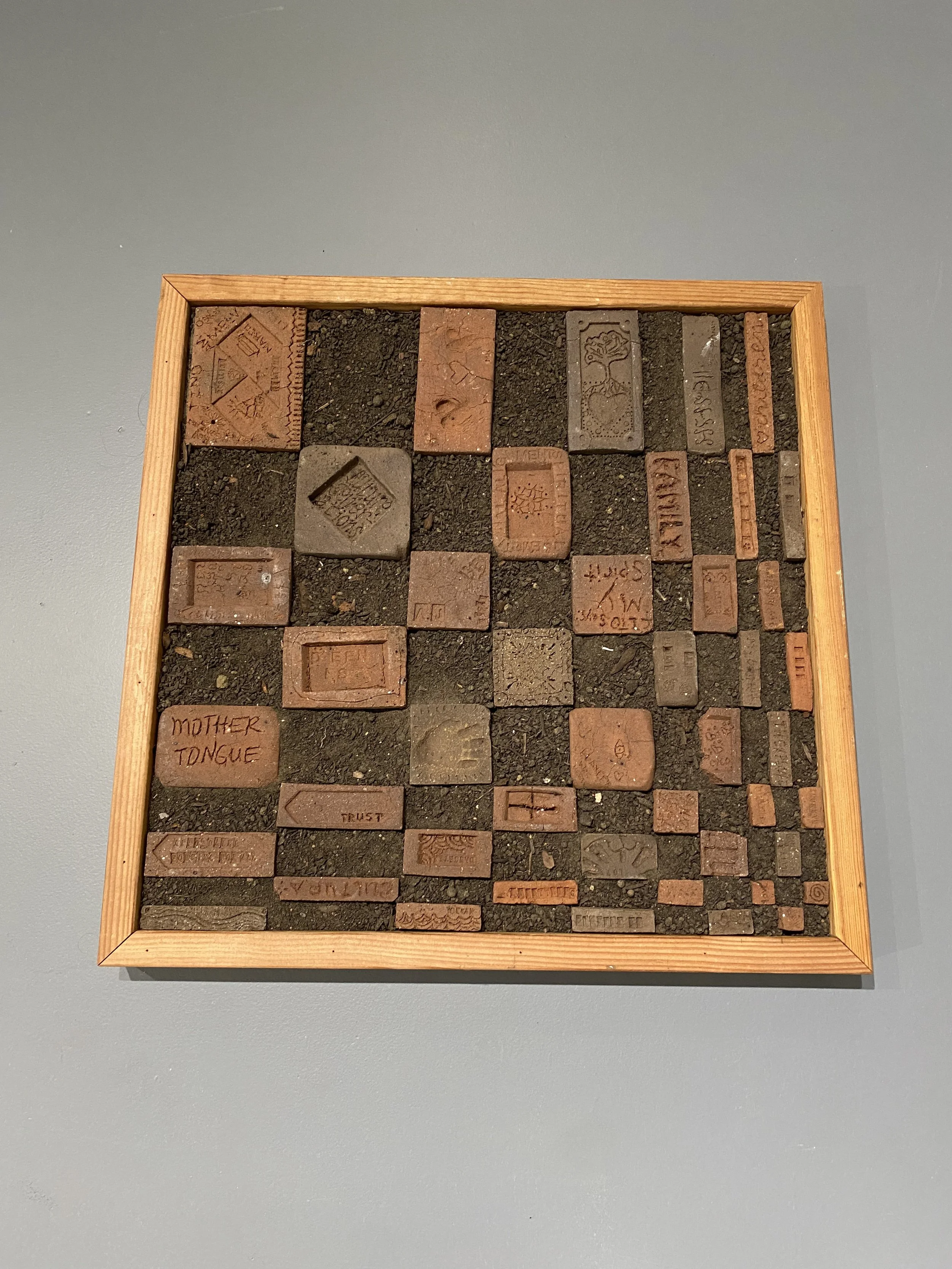
"Embedded Bricks III" by Cristine Blanco is made up of bricks with words and drawings inscribed by South of Market residents in San Francisco, which collectively "honors collective memory, ritual, and quiet resistance," a description accompanying the piece reads. Photo by Jamey V. Padojino.
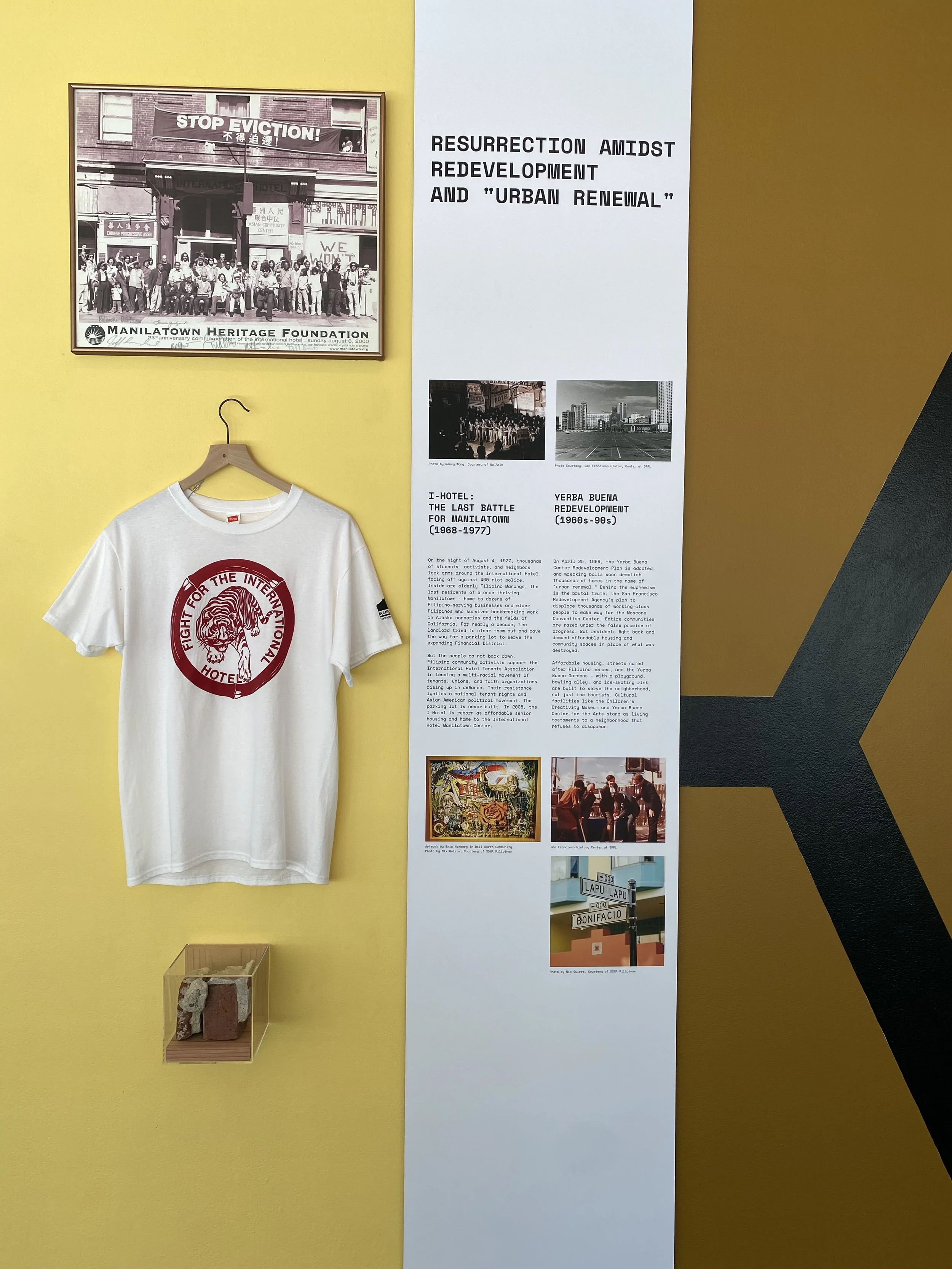
Histories of the International Hotel and Yerba Buena Redevelopment, as well as descriptions of how Filipinos responded, on display at the Makibaka exhibit in San Francisco. Photo by Jamey V. Padojino.
The I-Hotel's history extends in the exhibit through a woven piece, "Chiwang Chi Biyeg/River of Life Tapestry," which connects the local struggle to the controversial Chico River Dam project in the Philippines. The proposed dam in the Cordillera region of Luzon, the northern section of the Philippines, led indigenous people to resist, according to the Kalingafornia Laga Weavers' website. The group worked on the tapestry with Jenny Bawer Young and weavers from the village of Mabilong.
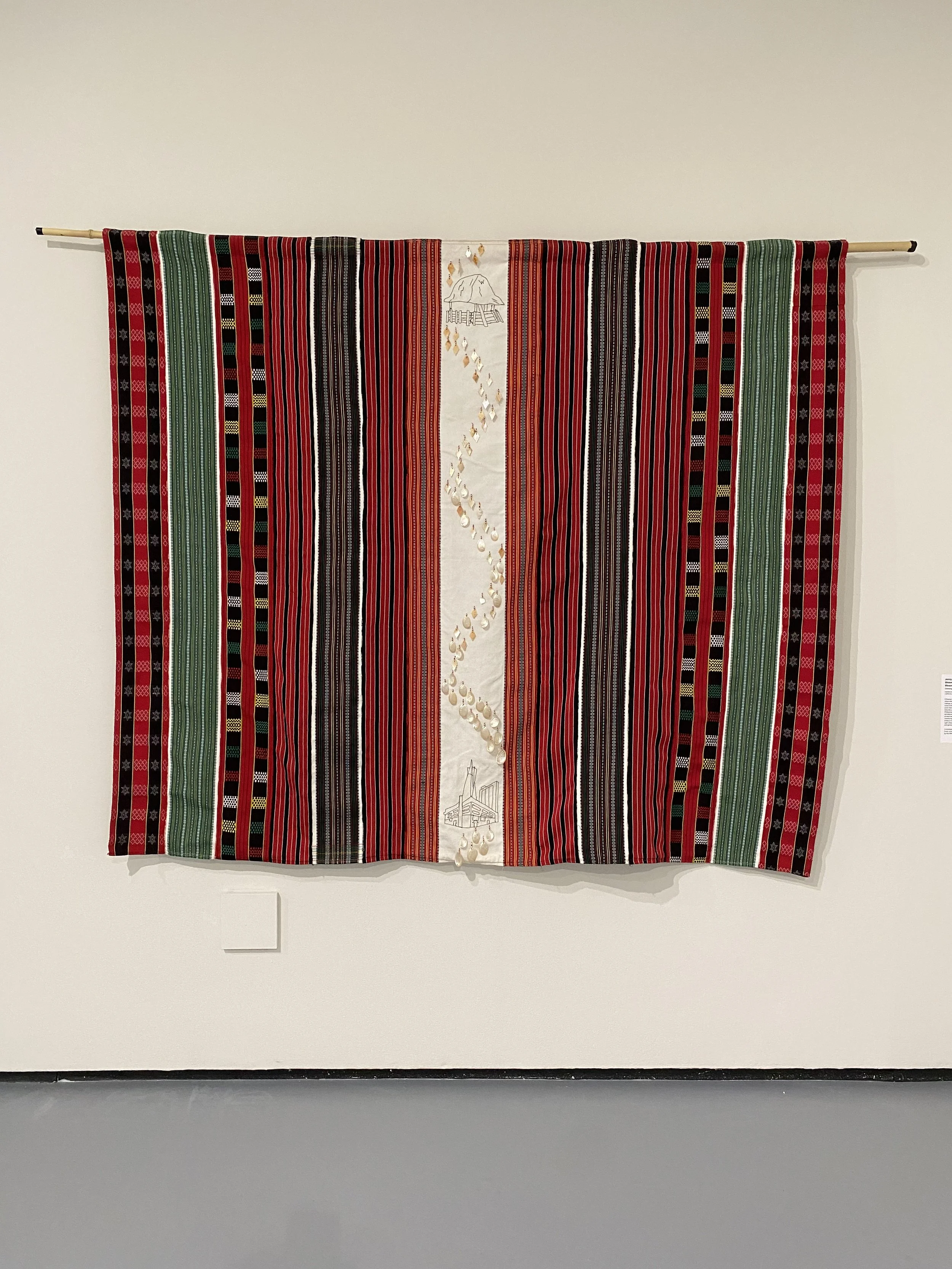
"Chiwang Chi Biyeg/River of Life Tapestry," by Jenny Bawer Young, Mabilong Weavers and the Kalingafornia Laga Weavers, incorporates woven patterns and shells from the Philippines and California. Photo by Jamey V. Padojino.
The center of the tapestry recognizes both of these struggles through Philippine clam shells and California abalone shells woven in a vertical wave.
When San Francisco resident Kenneth Yabut visited the exhibit on a recent Wednesday, he paused at one piece that became a portal to his past.
It was a collage by Erina Alejo with photos of his middle school, the Filipino Education Center located less than a mile away, and made him nostalgic about his time there in the late 00s. The images, including one with Yabut's cousin, are lined up from ceiling to floor in a corner of the exhibit. The 2025 piece's title, "The Older I Get, The More I Remember," is completely written in chalk at the top left corner, but is faded elsewhere on the display.
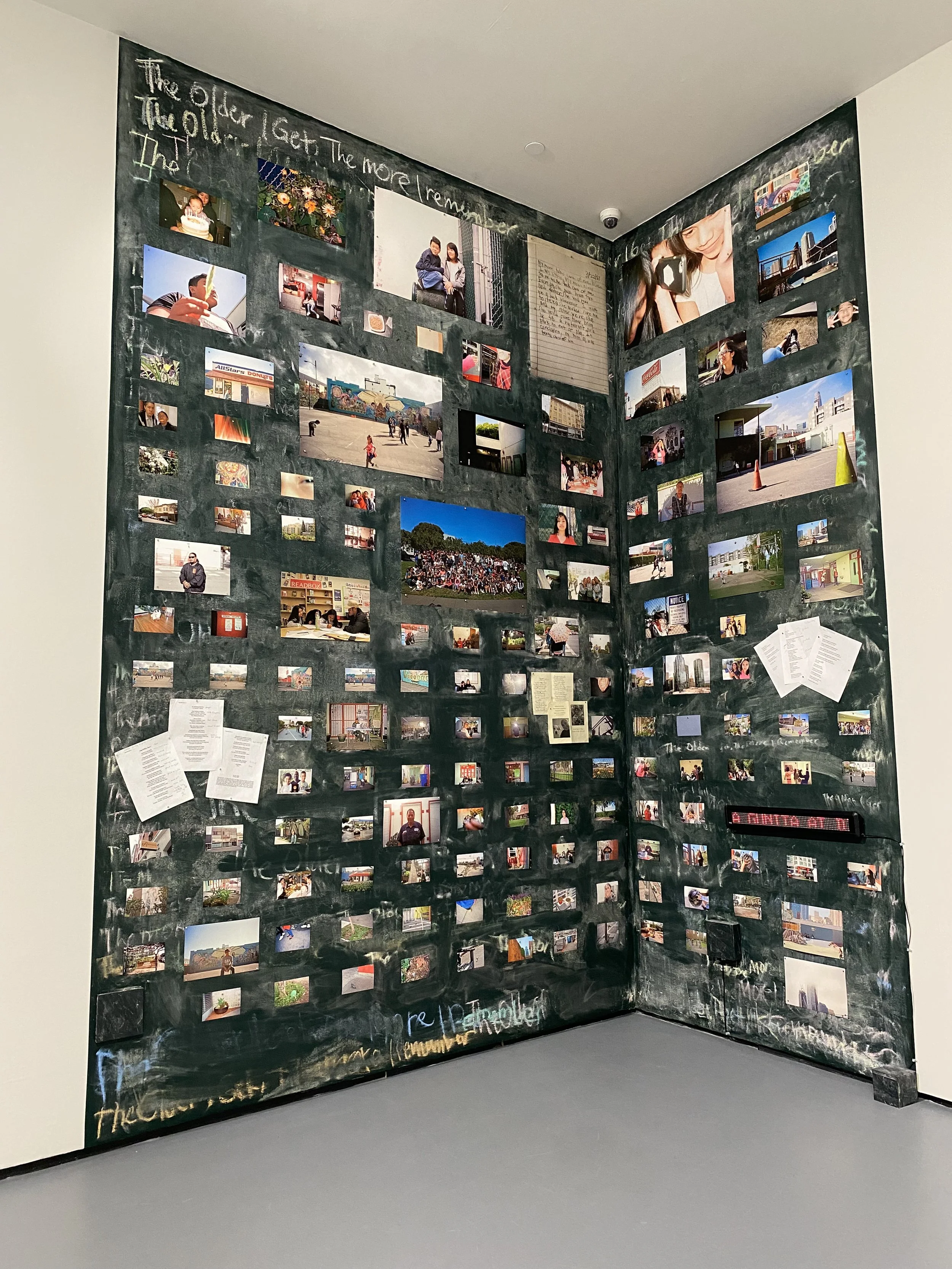
"The Older I Get, The More I Remember" by Erina Alejo captures photos and documents captured at the Filipino Education Center in San Francisco on a chalkboard surface with a LED sign and the piece's title written in chalk in the background. Photo by Jamey V. Padojino.
As Kenneth, 30, walked around the Makibaka exhibit, he felt proud to see Filipino culture on public display. The art reminded him of "the community that I could immerse myself into as an immigrant." He moved from the Philippines to San Francisco when he was 9 years old.
The reflective feelings that Kenneth experienced is what Raquel, the SOMA Pilipinas director, would like other Filipinos to take away from the exhibit. She also hopes that they look back on their own family histories and experiences in collective struggle.
She wants anyone who visits the exhibit to see the pride that Filipinos have in their history. "It's that revolutionary heritage that we have from our homeland. It's a whole lineage of Filipinos fighting for self-determination and we get that from them."
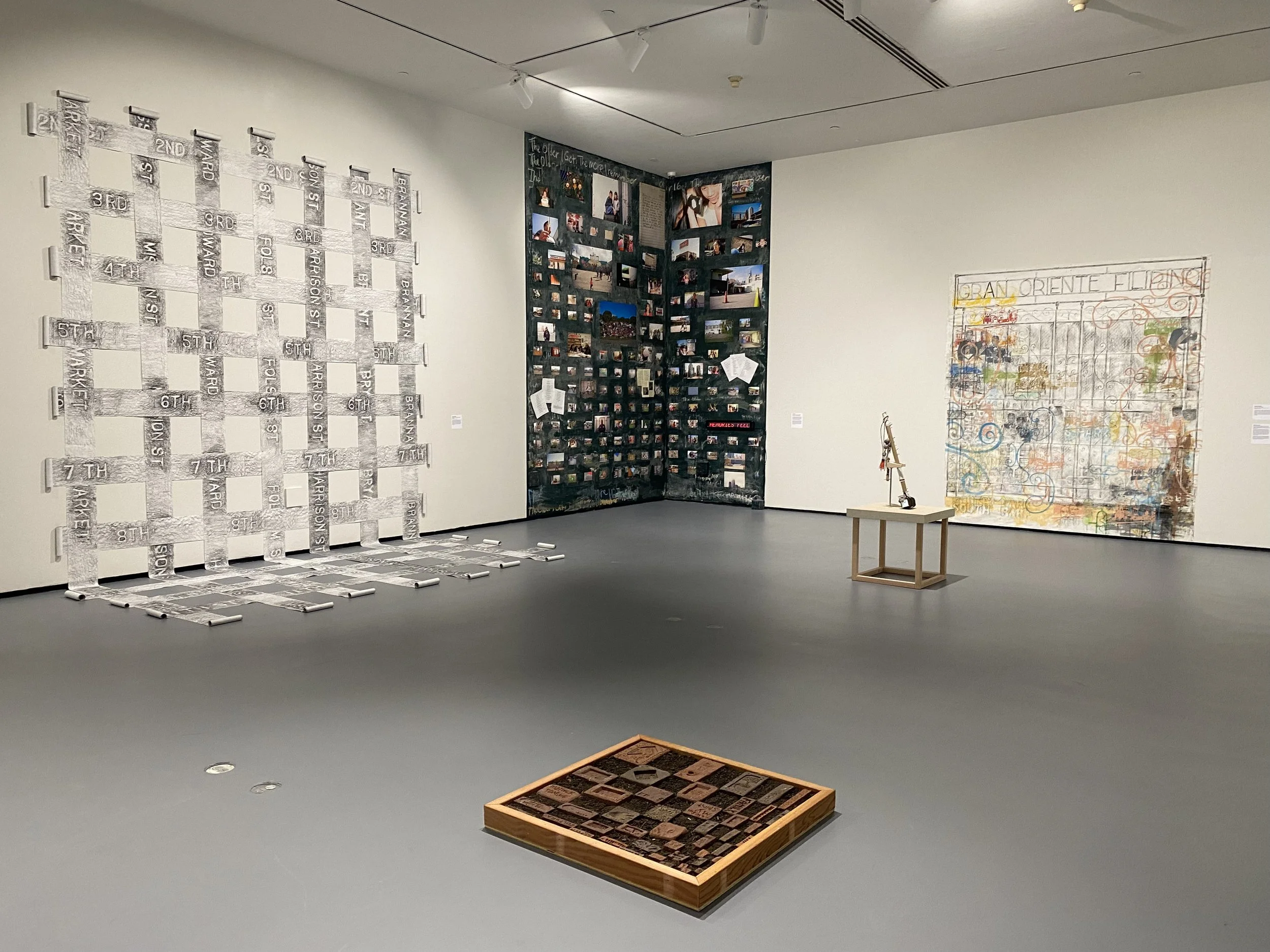
Makibaka: A Living Legacy, which explores Filipino activism and community in San Francisco, is on display at the Yerba Buena Center for the Arts through Jan. 4, 2026. From top left, the featured artworks are "The Blighted And Valuable Streets Of South Of Market" by England Hidalgo, "The Older I Get, The More I Remember" by Erina Alejo, "Be A Place Unmoved (Hongisto's Hammer)" by Weston Teruya, "Gran Oriente Filipino" by England Hidalgo and "Embedded Bricks III" by Cristine Blanco. Photo by Jamey V. Padojino
The exhibit's run is well-timed. It coincides with the 25th anniversaries of the South of Market Community Action Network (SOMCAN) and the Bayanihan Equity Center, as well as the 40th anniversary of dance performance company KULARTS, which are all represented in Makibaka. The show arrived in time for the annual Pistahan Festival at Yerba Buena Gardens in August and will be on display during the Parol Lantern Festival at the Yerba Buena Center later this year.
Makibaka: A Living Legacy, co-curated with Trisha Lagaso Goldberg, is on view at the Yerba Buena Center for the Arts, 701 Mission St., San Francisco. For more information, visit ybca.org.

Written by Jamey V. Padojino












When the Avengers: Doomsday one-year countdown dropped, audiences didn’t just watch. They paused, replayed, shared, and even speculated about hidden messages. A week later, the clip surpassed 14 million views, becoming a viral moment picked up across major media outlets that fueled anticipation for the next chapter of the Marvel Universe.
The countdown video was the result of a collaborative effort led by AGBO and its studio partners. Supporting the marketing team as a contracted editor was Joshua Ortiz (@joshuajortiz), a Filipino American filmmaker whose career has steadily built toward opportunities to contribute to projects of this scale, alongside earlier success with the short films he has written and directed.