

Ate First, Myself Last: The Weight of Being the Eldest Daughter in A FilAm Home
Learning to reclaim joy and self-worth without losing love.
Written By Jennifer Redondo
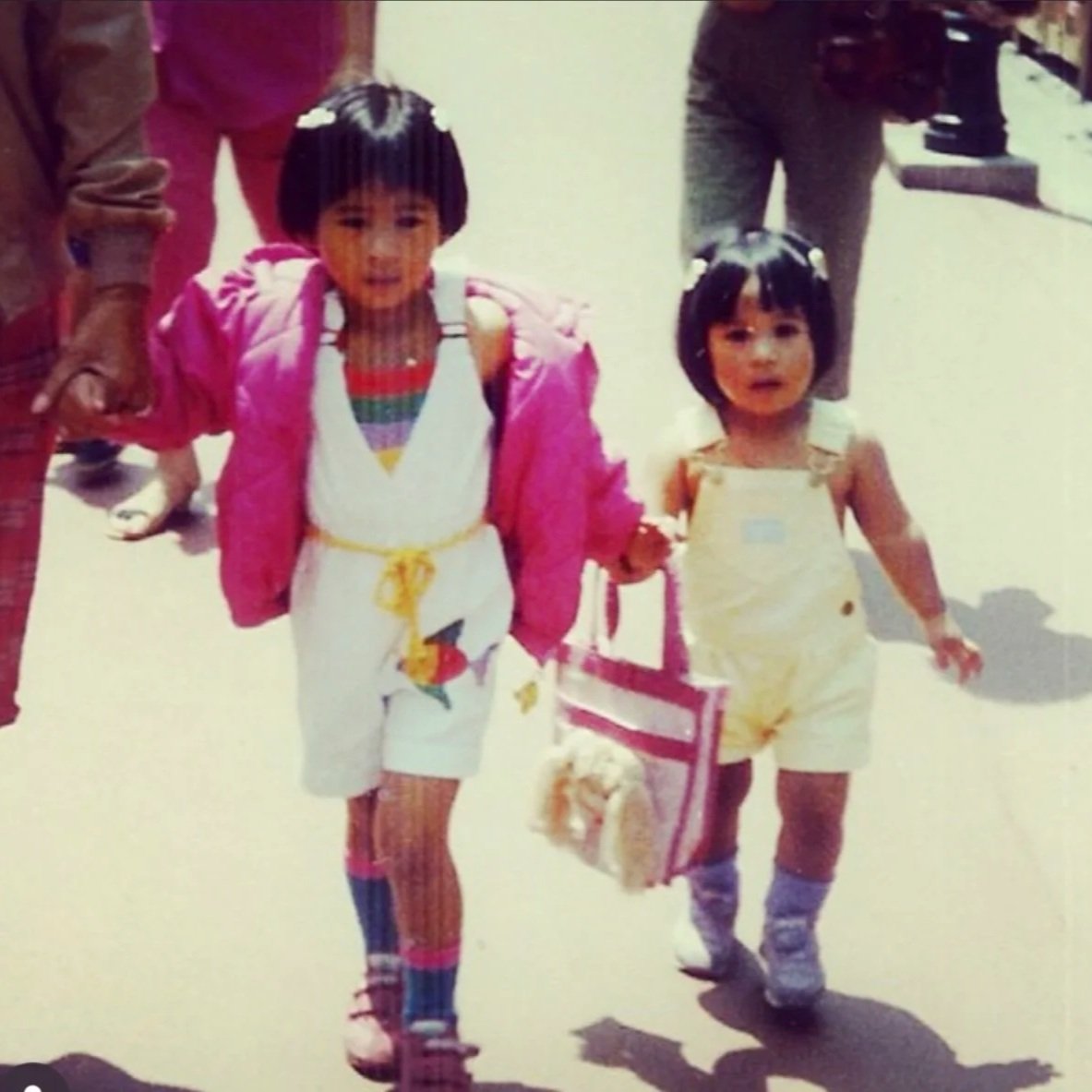
Photo courtesy of Jennifer Redondo from her childhood days with her younger sister.
These days there seems to be a “day” for everything. August 26th was “Eldest Daughter Day.” As the ateh (eldest daughter in Tagalog) in my family, I never knew such a day existed so I was curious to know more about how this came about in 2023. It was established to recognize and appreciate the often unseen responsibilities and emotional labor that comes with being the eldest daughter- something that I’m sure really resonates with a lot of Filipinas. This is what they often refer to as the “eldest daughter syndrome”. This special day aims to acknowledge their contributions, and encourages them to take care of themselves versus always prioritizing others’ needs.
Since it was “my day,” I couldn’t help but contemplate my own ateh experience. To be honest, I never put much thought into it because I just thought this is what it is and I am supposed to be doing the most at all times. Simply because, for as long as I can remember, I was referred to as ateh.
Being the first generation born in America, I felt that I always had to be strong and make sacrifices just as my parents did for my sister and I, along with the rest of the family “back home” in the Philippines. My mom was the first in her family to come to the United States. She had to be brave and leave the comfort of home for a foreign country, all alone! With minimal resources, she was just figuring out how to survive and make it.
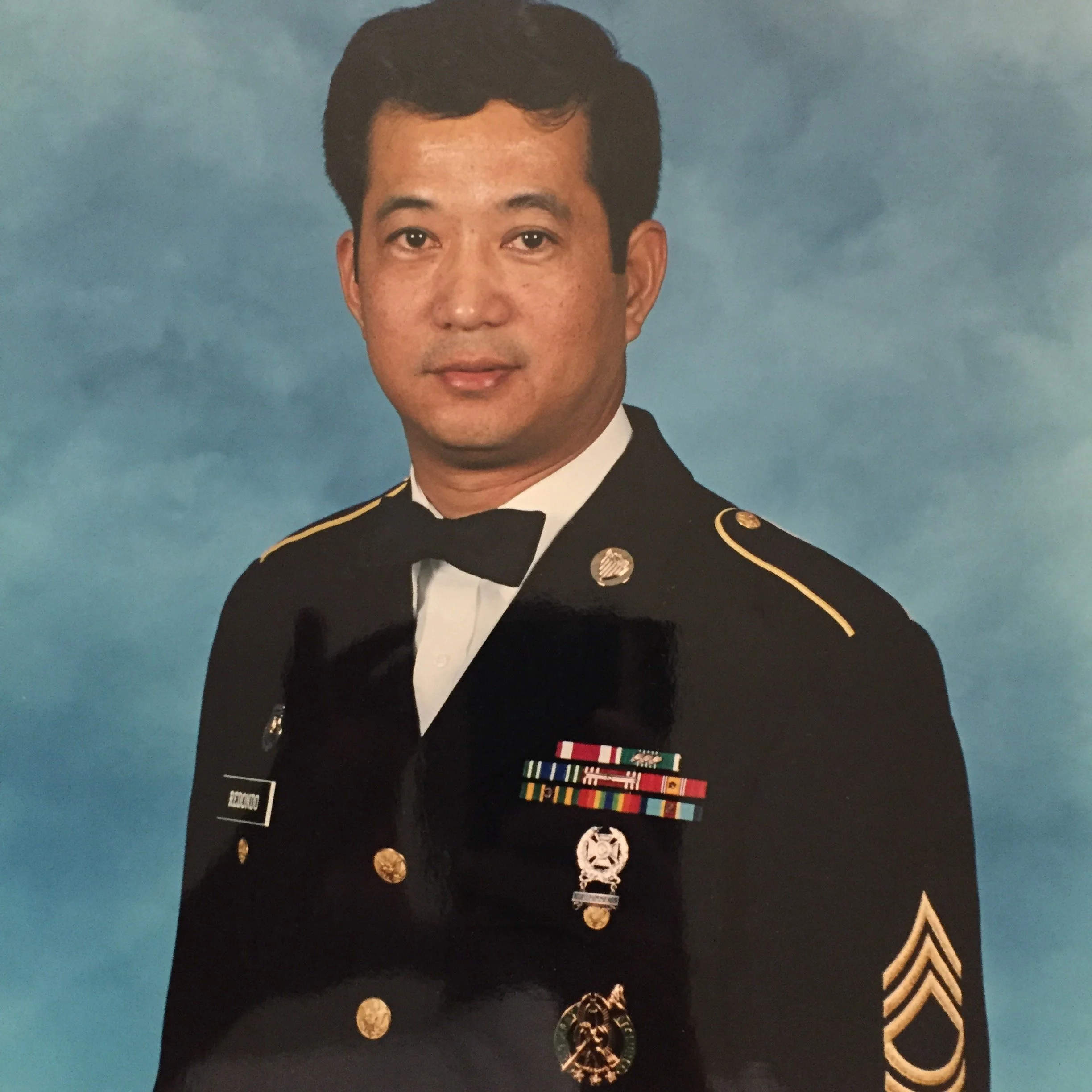
Luckily, my mom was a Registered Nurse and she immigrated to the U.S. with an education and stable job that would allow her to set herself up along with everyone else she’d end up supporting. Though, it came at a price – she worked double jobs. Full time jobs. Night shift because of the differential. Also because she wanted to raise us, be present and be available in the daytime because my dad, a high ranking U.S. Army officer, was often away. He was gone on tour duty or stationed in other areas. To keep mine and my sister’s situation “steady,” my mom decided it would be best for us to stay in place while my dad was working away from home. From a young age, I was forced to step up because my parents were always working! I knew that they were doing what they had to do to survive and provide.
Now, as an adult, I feel so spoiled and selfish saying this – but it is sooooooo exhausting being the ateh. Not only did I have to study and get good grades, but I also had to be a babysitter, family therapist, an additional parent to my sibling, and housekeeper! That list doesn’t get shorter with age. The list actually gets longer! Because over the years, I’ve had to add financial planner, caregiver of aging parents and executor of parents’ will/trust/estate to my resume while balancing a demanding corporate career on top of everything else I have going on.
As I examine myself, along with my fellow atehs, I want to share some traits that have made me the woman who I am today. Here are some things I’m working through. I’m hoping it helps other big sisters navigate their feelings too:
1. There’s no such thing as perfection.
As the ateh, I’ve always felt the need to strive for perfection. Like most eldest daughters, I fit all the stereotypes: Type A, workaholic, problem solver, and my sister could attest to this: I am bossy! I am responsible and dependable. I was held to higher standards than my younger sister. My parents were always much stricter and harder on me. I was the “role model” and I had to set and be a good example for my sister.
As a result, I always felt anxious about not being enough or not doing good enough. I felt a lot of pressure to do and be the best so that I don’t let my parents down. Of course, it doesn’t help that Asian parents can be “Tiger” moms and dads. Any grade less than an A is unacceptable and considered a failure. At a young age, I was trained to know how to do anything and be everything. I was essentially raised to take on the entire world! I had no choice but to be capable. We didn’t have Google or Alexa back then!
Now, I’m not saying that I am perfect. Because I am far from perfect. I am a work in progress, but I’ve learned that “perfect’ looks different to everyone, and that’s ok.
2. It’s okay to ask for help.
I am what you call a hyperindependent adult. Simply because I didn’t have anyone to rely on, depend on, or lean on. There was no one to protect me or be there for me when I needed help. I always had to be the strong one. I just had to figure things out myself.
There’s a meme I saw on Instagram that said: “The strongest men are the eldest daughters.” I felt that. I really felt that. Eldest daughters have a strong masculine presence about them. I struggle when it comes to relationships because I don’t trust that someone else can protect me, take care of me, and make sure that I am okay. I’ve never experienced what that’s like.
I don’t ever want to be a burden on someone else. I admit that I don’t really know how to ask for help, mostly because I was always the one helping others. I had the responsibility of helping my parents and my sister. That’s something that’s carried on with everyone else. I have to let go of the belief that I have to always be the strong one. I have to learn how to ask for help, and accept love and help from others, without guilt. I need to remind myself that I am not a burden.
3. Everyone else’s needs and emotions do NOT come before mine.
Feelings? My family always joked that I don’t have feelings! I didn’t know how to feel. When I was a kid, if I cried or expressed any kind of emotion, I was told to stop! I was silenced. I was told not to show weakness. I wonder how much of that is attributed to being raised by a military officer?
I struggle to express my own needs and vulnerabilities. Mostly because I was told to keep quiet, don’t express feelings, don’t talk back. I was expected to succeed without complaining or with little guidance. Any time someone would ask me how I’m doing, I would reply with, “I’m fine!”
I had no idea what “boundaries” meant until I became an adult! It’s only now that I am understanding what it means to set boundaries. I neglected my own feelings and needs because I was so busy tending to everyone else but myself. I was the one trying to hold it down – I was the emotional support for my parents and I was the additional parent to my sister. Who, by the way, didn’t need another parent – she needed a sister!
I grew up so fast. I feel jipped because I was too busy adulting. I was expected to be an adult at a young age. I had to parent before I was even really ready to become one. I had to step up and take care of myself and my sister. I automatically became responsible for others.
Now, I’m learning to process my emotions. I’m learning to sit and feel. I am finding my voice and making sure that I am heard. I am no longer holding in and bottling all of the emotions that I’ve been told to tuck away or ignore. I am no longer ashamed, nor am I afraid to speak my mind – even if it may be viewed as disrespectful or a disgrace to my family. It’s freaking scary and it is so damn uncomfortable. I am finally discovering my own needs. I am finding my identity beyond responsibility. I now truly understand what it means to be unapologetically me!
4. Don’t feel guilty for wanting personal space.
Growing up in a Filipino household, I had 10+ people living in the same house. Just because there were a lot of people staying at the house, it didn’t mean that they were always around. For the most part, they were all at work! I didn’t really have my own room until I got older. Living in the U.S., I learned that 18 was the legal, adult age. Most Americans leave home and move away for college.
Most of the folks I grew up with, stayed home. Not many of us moved away for college because our parents wanted us to stay close by and because it was expensive. My parents didn’t allow me to consider going to college out of state. I was determined to go as far away as possible, and that’s how I ended up at UC Berkeley! It was the farthest school from home! The moment I had an opportunity to leave, I left. At first, I felt really really guilty about it. I didn’t know how to put myself first. I felt bad prioritizing myself and doing what I wanted. I was always trying to make sure everything was good and everyone was fine. Eventually, I learned how to tune out the noise and figured out that I didn’t need to give in to the guilt trips.
Taking the leap and moving away was probably one of the hardest but best decisions I’ve made in life. It gave me a chance to create my own space, build my own life, and most importantly, grow. It also helped my family because once I was gone, they didn’t have easy access to me. They had to figure out how to manage and do things without me. Eventually, they figured it out. I managed to stop feeling guilty for resting, for choosing myself, and protecting my peace. This is not something that instantly happened once I left home. Honestly, I even battled with it when I gave up my freedom, space, and comfort to go back home to take care of my aging mom when she was sick. There were moments where I had to step away and take some time to take care of myself. I finally understood what Lauryn Hill was referring to in “Doo Wop”: “How you gonna win, when you ain’t right within?”
5. It’s okay not to be okay.
Yep, that’s a hard pill for me to swallow… because “I’m fine,” right? I never signed up for this. I was born into this. I’ve had to come to terms and admit that I am not okay! I’ve had to get help from friends, trusted family, and even professionals. I have been going to therapy. I found a church and community to pray for me and with me. I continue to listen to self-help podcasts and read books to help me with everything, whether it’s figuring out how to get better sleep or how to invest money to prepare for retirement. I’m reaching out to my workout partners who kept me accountable, making sure I show up to the gym and for myself. I’m working my discipline and consistency muscles. It’s one thing and one day at a time. I’m learning how to have grace in myself and practicing patience.
I used to think that love was conditional. Love isn’t just an emotion, but it’s action, doing, showing, acts of service, quality time – you know, the “love languages.” I know for sure that my parents loved me. They showed me through the knowledge and tools that they had available to them. They may not have had the words to express themselves, but their silence was very loud. In a sense that they never complained. They worked so hard and made so many sacrifices to survive and provide for our family. They gave my sister and I the very best, and for that I am so grateful. I wouldn’t be who I am or where I am today without them.
Through the support of friends and family, professionals and community, I am able to be in my feelings without fear. Though, I am still learning to receive. Thanks to all of you, I feel safe, seen, loved, and supported. Writing has been therapeutic for me, and it’s helping me process grief and guiding me to the road to healing.
I hope that reading my work also helps you feel seen, loved, and supported. You are not alone. Neither am I.
Written by Jennifer Redondo
Co-Founder and Co-Author of In Her Purpose











When the Avengers: Doomsday one-year countdown dropped, audiences didn’t just watch. They paused, replayed, shared, and even speculated about hidden messages. A week later, the clip surpassed 14 million views, becoming a viral moment picked up across major media outlets that fueled anticipation for the next chapter of the Marvel Universe.
The countdown video was the result of a collaborative effort led by AGBO and its studio partners. Supporting the marketing team as a contracted editor was Joshua Ortiz (@joshuajortiz), a Filipino American filmmaker whose career has steadily built toward opportunities to contribute to projects of this scale, alongside earlier success with the short films he has written and directed.